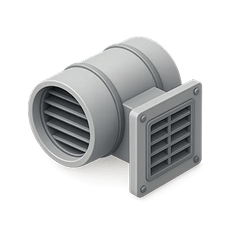
Find the right duct dimensions for any run. Pick metal or flex, enter the CFM, and get a size to order. Learn more
Duct size calculator
Find the right duct dimensions for any run. Pick metal or flex, enter the CFM, and get a size to order.
Your duct size will appear here, please add:
You handle the ductwork. Workiz handles the rest — scheduling, dispatching, invoicing, and payments, all in one place.
How to use the HVAC duct sizing calculator
Duct sizing is about matching the duct to the airflow it needs to carry. An undersized duct creates noise and restricts airflow, while an oversized one wastes material.
What the tool considers:
- Airflow (CFM) — The volume of air the duct must deliver.
- Duct type — Works for both flexible and metal duct installations.
- Application — Works for both return air and supply ducts to ensure proper pressure throughout the system.
This calculator gives you the duct dimensions based on standard friction rates used in residential HVAC. For a full system design, start with the HVAC load calculator to size the equipment, then work down to airflow and ducts.
Duct size chart: CFM to duct size
Quick reference for common airflow values. Sizes assume residential supply runs at standard velocities — flex sizes include the typical-install friction bump. For return or exhaust runs, a different install quality, or any airflow not listed, use the calculator above.
| Airflow (CFM) | Round metal duct | Round flex duct | Rectangular equivalent |
|---|---|---|---|
| 50 | 4" | 5" | — |
| 100 | 5" | 6" | 6" x 4" |
| 150 | 7" | 7" | 8" x 4" |
| 200 | 7" | 9" | 12" x 4" |
| 250 | 8" | 9" | 16" x 4" |
| 300 | 9" | 10" | 18" x 4" |
| 400 | 10" | 12" | 26" x 4" |
| 500 | 12" | 14" | 14" x 8" |
| 600 | 14" | 14" | 16" x 8" |
| 800 | 14" | 18" | 22" x 8" |
| 1000 | 16" | 18" | 22" x 10" |
| 1200 | 18" | 20" | 26" x 10" |
| 1400 | 20" | 22" | 18" x 16" |
| 1600 | 20" | 24" | 24" x 14" |
| 2000 | 24" | 24" | 26" x 16" |
Always round up to the next standard size when your airflow falls between rows — a slightly bigger duct runs quieter and costs less to push air through than one that's too small.
Frequently asked questions
What is better — round or rectangular ducts?
Round ducts are more efficient because they have less surface area, which reduces friction. Rectangular ducts are best for tight spaces like between floor joists. Regardless of shape, proper sizing ensures the correct air velocity for good distribution.
What is the difference between metal and flex duct?
Metal is smoother and creates less air resistance. Flex duct is easier to install but produces more friction. For the same CFM, a flexible duct usually needs to be one or two sizes larger than a metal one to perform equally.
What happens if HVAC ducts are too small?
Undersized ducts lead to whistling noises, higher energy bills, and hot spots in far rooms. Matching the duct diameter to the system's actual CFM output prevents these issues.
How do I size a return air duct?
Return ducts often need to be slightly larger than supply ducts to reduce noise and static pressure. Input the total system CFM to get the required intake dimensions to keep the blower healthy.
Can I use this calculator on a job site?
Yes. It is optimized for mobile, so you can pull it up on your phone to verify dimensions before you start cutting or ordering materials.